2024
Lead Product Designer
2024
Figma, Adobe Suite, Miro, Unreal Engine.
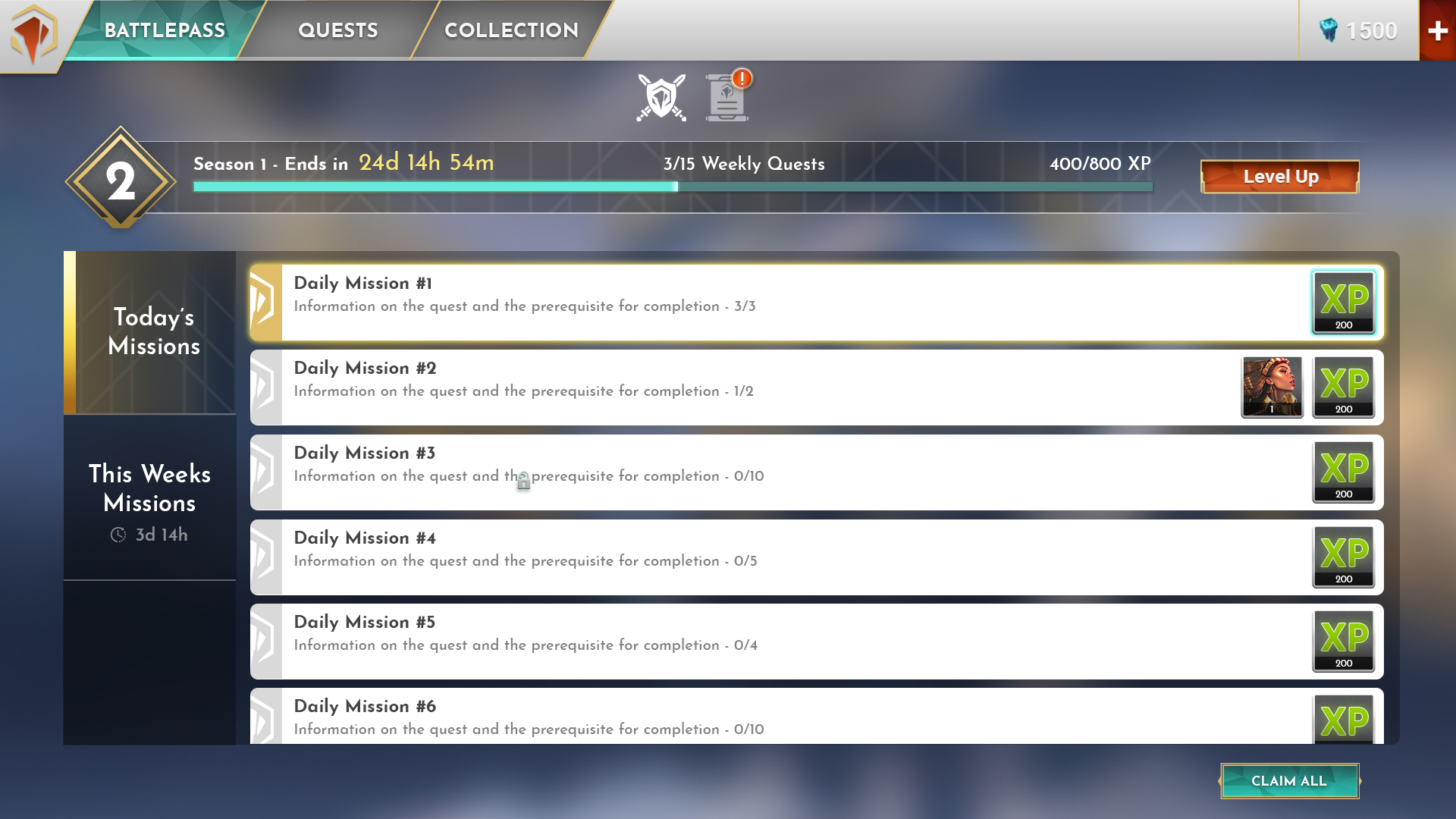
This project focused on designing the Battle Pass for Shardbound, working closely with the product manager and engineering to define the initial flow, requirements, and constraints. As this was a new feature for the game, the work began by aligning on core objectives and validating early assumptions through internal testing and player feedback.
The design evolved alongside the game itself. As more detail emerged around lore, characters, environments, and card art, the Battle Pass UI was iterated on multiple times to ensure it remained visually cohesive with the broader experience. Each iteration refined both the look and the usability, reflecting a deeper understanding of the game’s identity and player motivations.
The Battle Pass ultimately became a strong addition to the product. It introduced seasonal structure, an additional quest layer, and time-based events, giving players more ways to earn rewards while providing ongoing content that encouraged sustained engagement.
The work began with an initial workshop alongside the product manager, co-founder, and engineering to align on player journey, feature requirements, and technical constraints for the Battle Pass. With this foundation in place, I researched how a range of games, both within and outside the genre, approached Battle Pass UI and integration to understand common patterns and opportunities for differentiation.
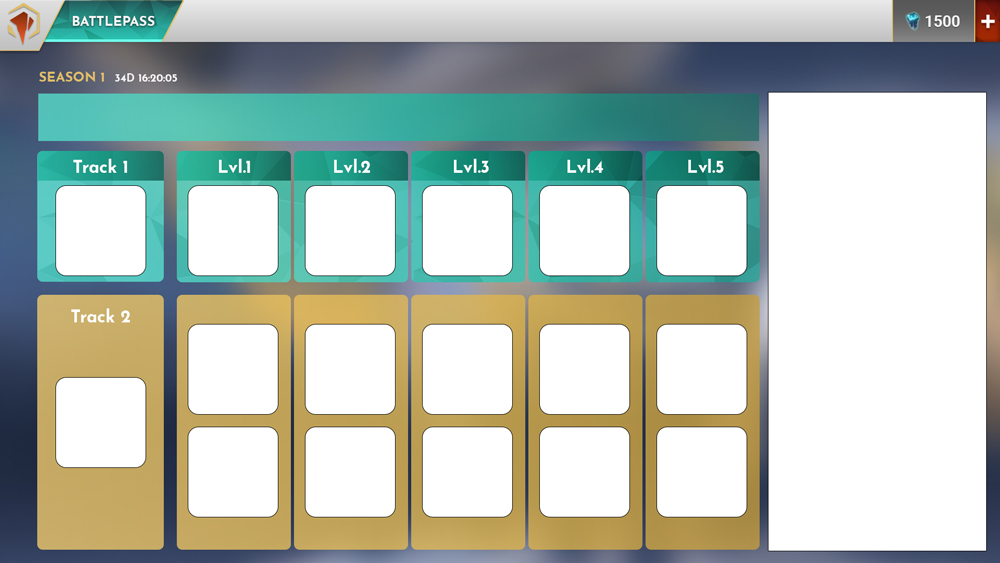
Using these insights, I created an initial wireframe leveraging existing UI assets and presented it to the team for early feedback. Based on those discussions, I expanded the design to include additional functionality and created new assets and visual elements to support both the Battle Pass and the accompanying quest system. Once aligned, the designs were handed over to engineering for implementation in Unreal Engine, followed by internal playtesting.
During implementation, we identified discrepancies between the intended design and the in-game result. After reviewing these together with engineering, we aligned on adjustments to ensure layout, spacing, and styling more closely matched the design intent.
We then moved into player testing using the pre-registered tester group. Feedback from this phase surfaced key usability issues, particularly around players not clearly understanding their current level, how much experience was required to progress, and the relative rarity of certain rewards.
As the broader game UI continued to evolve, I iterated on the Battle Pass design to address this feedback while also aligning with updated styling and visual language. This included introducing clearer progression indicators, more prominent components to show position within the track, seasonal context, and promotional elements tied to active events.
Due to internal prioritization and broader UI updates taking precedence, the Battle Pass and quest system were temporarily housed within a modal experience rather than being fully integrated into navigation. This allowed development to continue without blocking other critical updates.
While engineering focused on additional features, the product manager and I ran a follow-up workshop to review playtest findings and refine the system further. Using Miro and Figma, we finalized updates to the flow and layout in preparation for the next round of player testing.
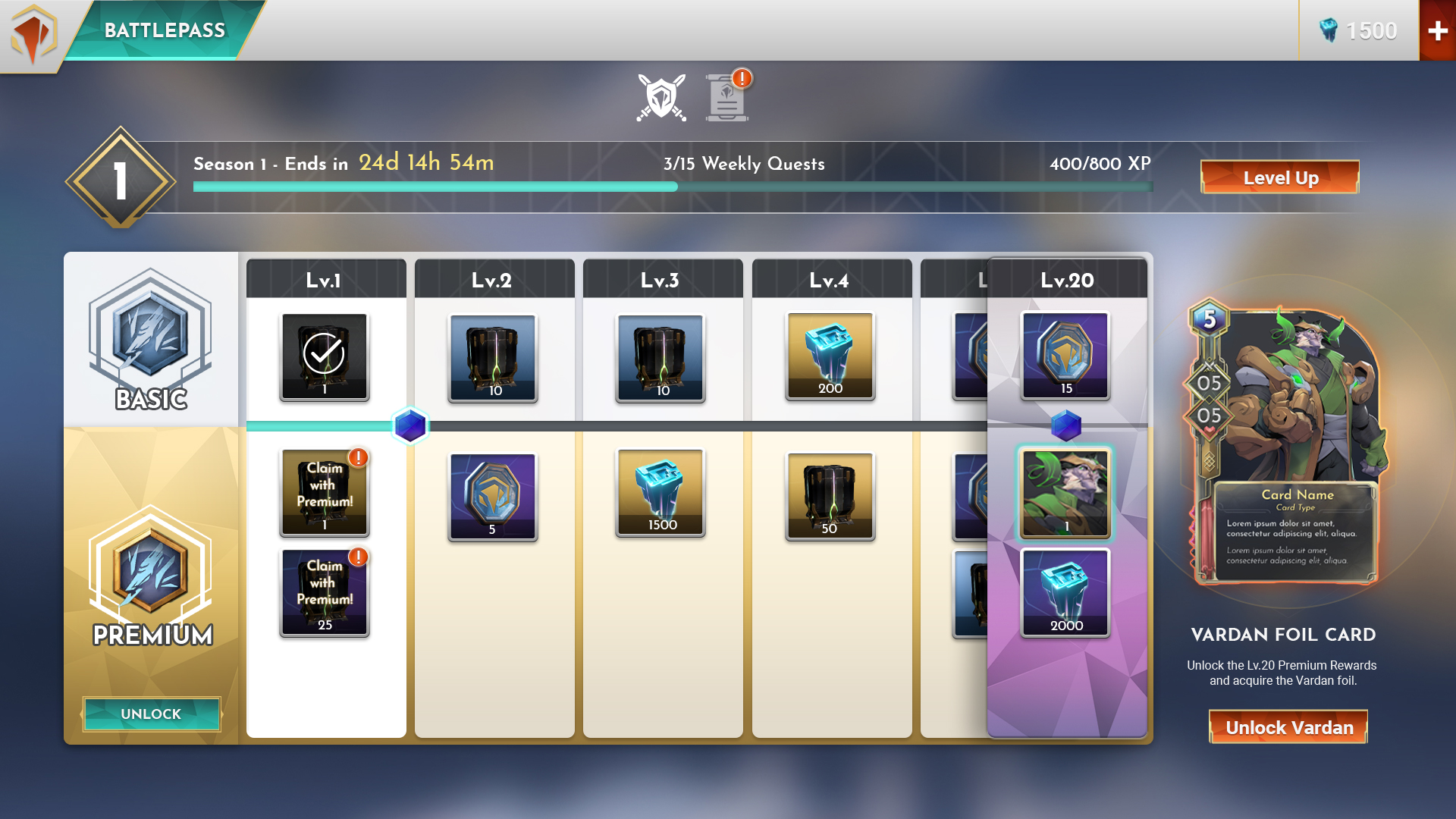
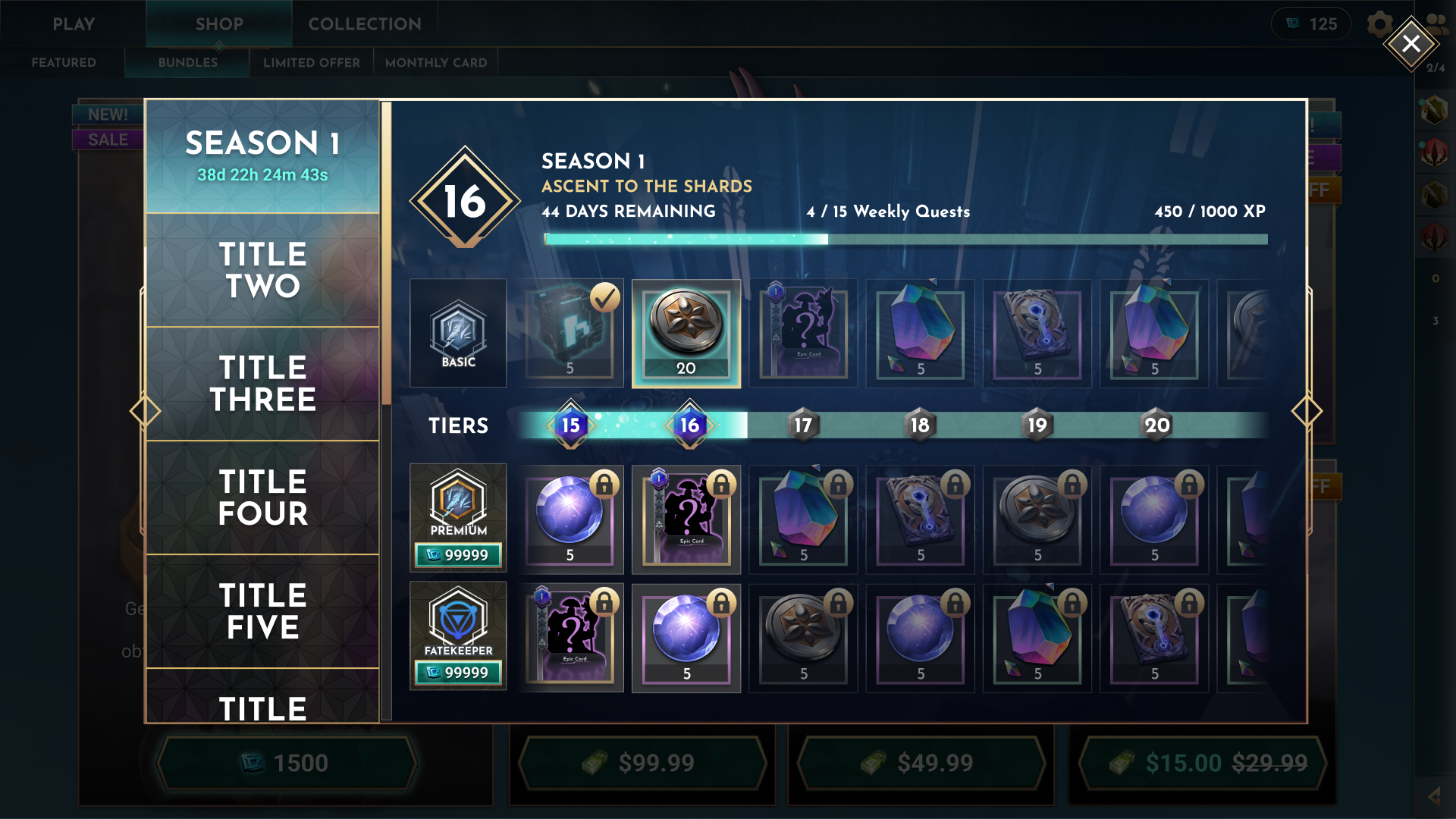
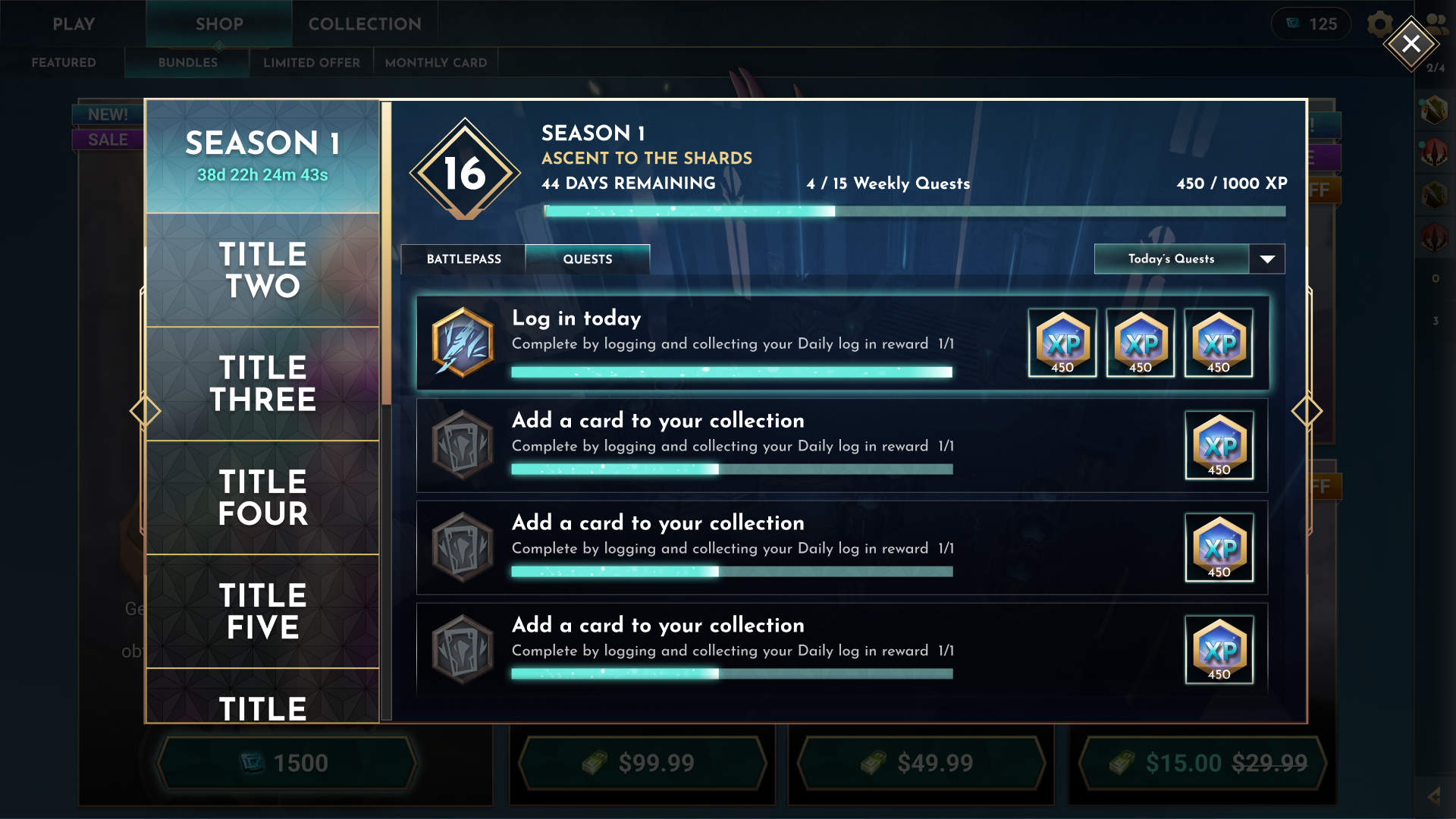
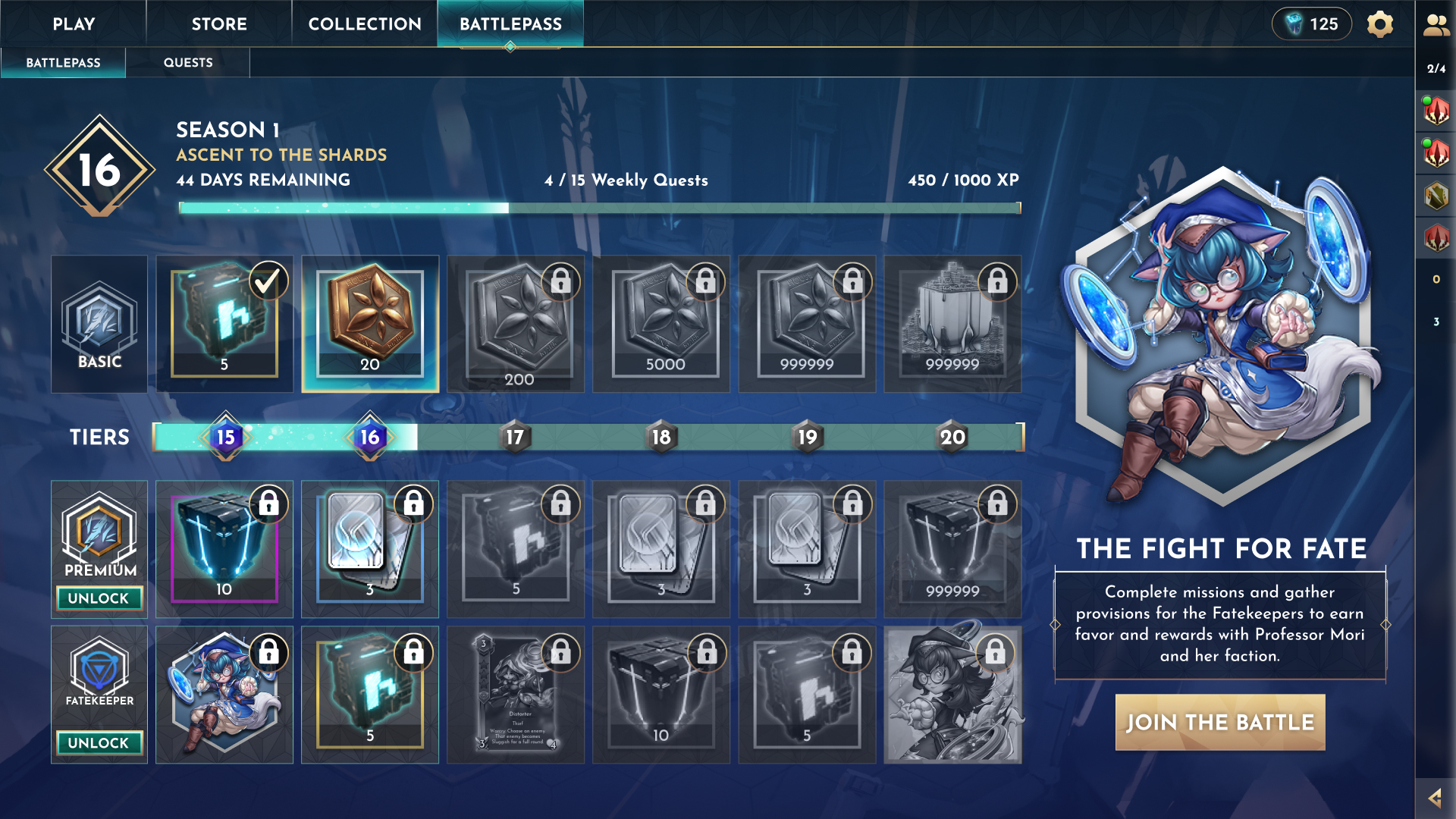
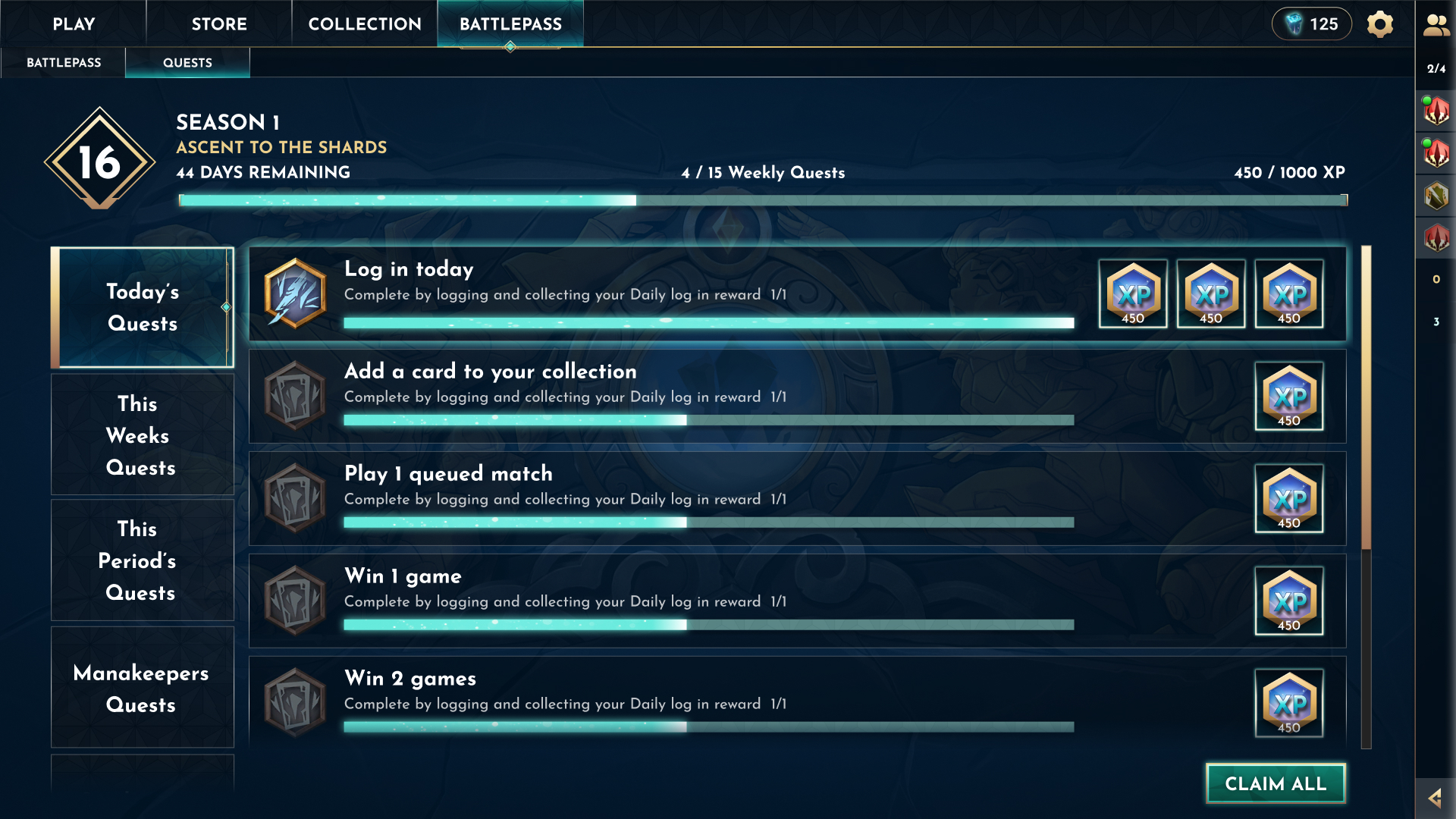

As engineering continued to roll out broader UI updates, the product manager and I finalized the Battle Pass design and prepared it for future integration and additional rounds of playtesting.
The result was a clear and approachable reward system that made progression easy to understand while still feeling motivating and rewarding. The Battle Pass and accompanying quest system added meaningful structure to play sessions, giving players clear goals and a sense of momentum without feeling like a grind.
Playtesting showed that players engaged with the Battle Pass and quests naturally between matches, using the system to plan what they wanted to work toward next. Rather than disrupting gameplay, it became a seamless part of the overall experience and was seen as a positive addition that increased engagement without introducing friction.
Iterative updates improved readability and accessibility across the experience, and the addition of visual feedback helped reinforce moments of progression and reward. These refinements brought clarity and energy to the system, strengthening its role within the broader game flow.
The project also provided valuable learning opportunities. Through research, testing, and iteration, I strengthened my approach to designing progression systems and live content features. The insights gained will continue to inform how I approach similar problems in future projects.
I'm currently looking for freelance or Inhouse opportunities, my inbox is always open or alternatively can be contacted on Linkedin or Artstation. Whether for a potential project or just to say hi, I'll try my best to answer your message!